
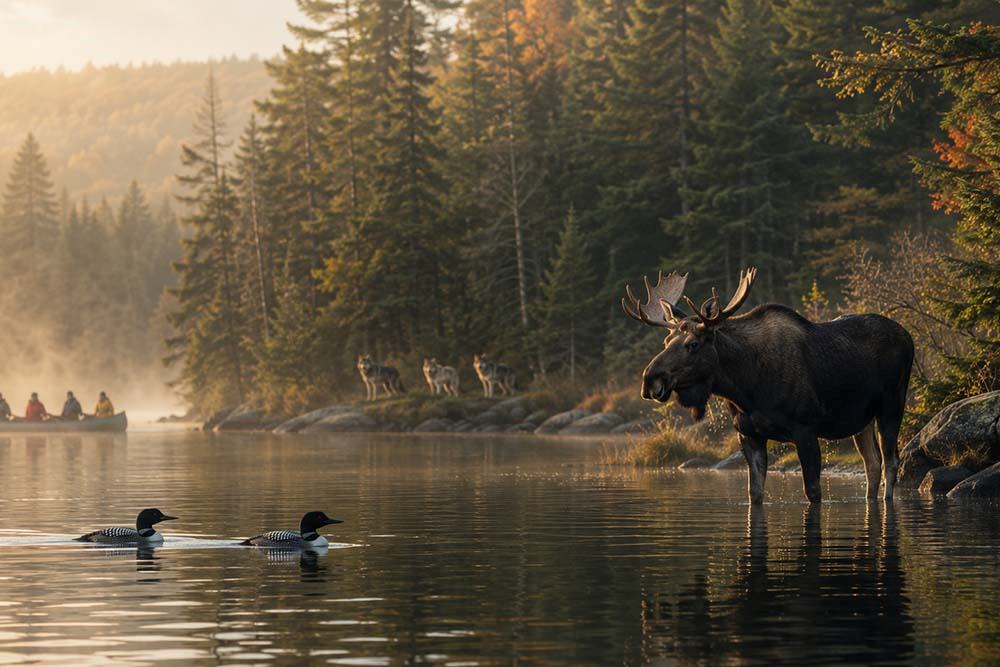
Algonquin Park Wildlife Encounters 2026: How to Safely Observe Moose, Wolves and Loons on Your Visit
Visiting Algonquin Park offers one of Canada’s best opportunities to experience wildlife in its natural habitat. Every year, thousands of visitors travel to the park hoping to spot iconic Canadian animals while enjoying hiking, canoeing, camping, and scenic drives. Whether you are planning your first trip or returning for another adventure, understanding Algonquin Park wildlife viewing 2026 helps you enjoy unforgettable encounters while protecting both yourself and the animals. Responsible wildlife observation ensures the park remains a safe and healthy environment for future generations.
Wildlife You Can Expect to See
One of the biggest attractions of Algonquin Park wildlife viewing 2026 is the incredible diversity of species that call the park home. Visitors may encounter a variety of wildlife throughout the year, including moose, white-tailed deer, black bears, beavers, foxes, wolves, river otters, loons, great blue herons, turtles, and numerous bird species.
The exact wildlife you see depends on the season, weather conditions, and time of day. Spring and early summer often provide excellent opportunities for birdwatching, while autumn is well known for moose sightings and spectacular fall colours. Every visit offers a unique wildlife experience.
Where to See Moose in Algonquin Park
Many visitors specifically hope to see moose in Algonquin Park, Ontario 2026, as the park is one of the best locations in Canada for observing these impressive animals. Moose are commonly found feeding in roadside ponds, wetlands, lakeshores, and marshy areas, particularly during spring and early summer when they seek aquatic vegetation.
Early mornings and evenings offer the highest chances to see moose in Algonquin Park, Ontario, 2026, because cooler temperatures encourage increased activity. Driving slowly along park roads and exploring wetland viewing areas can greatly improve your chances of spotting one safely.
Always observe moose from a respectful distance and never attempt to approach or feed them.
A Safe Wildlife Encounter Guide
Every visitor should follow an Algonquin Park animal encounters guide to protect both wildlife and people. Wild animals should always remain wild, and maintaining safe distances helps reduce stress on the animals while preventing dangerous situations.
If you encounter a black bear, remain calm, avoid running, and slowly back away while giving the animal plenty of space. If you see wolves, enjoy the experience from a distance without attempting to follow or interact with them. Keep food securely stored at campsites to avoid attracting wildlife.
Following an Algonquin Park animal encounters guide also means staying on designated trails, respecting wildlife closures, and never leaving food or garbage behind.
Tips for Wildlife Photography
Capturing memorable wildlife photographs requires patience, preparation, and respect for nature. Successful wildlife photography in Algonquin Park 2026 begins with using a telephoto lens rather than approaching animals too closely. This allows photographers to capture detailed images while minimizing disturbance.
The best lighting for wildlife photography in Algonquin Park 2026 is usually found shortly after sunrise and before sunset, when many animals are naturally more active. Remain quiet, avoid sudden movements, and never bait wildlife for photographs. Ethical photography creates better experiences for both visitors and animals.
Enjoying Wildlife Responsibly
Respecting wildlife ensures everyone can enjoy Algonquin Park safely. Always keep a safe distance, obey park regulations, supervise children closely, and never attempt to touch or feed wild animals. Carry binoculars to observe wildlife without disturbing natural behaviour.
By practicing responsible wildlife viewing, visitors contribute to conservation efforts while creating memorable experiences in one of Canada’s most celebrated natural destinations.
FAQ’s
Q1. What wildlife can I see in Algonquin Park?
A: Visitors may encounter moose, black bears, wolves, white-tailed deer, beavers, foxes, river otters, loons, turtles, great blue herons, owls, and many other bird species. Algonquin Park wildlife viewing 2026 offers excellent opportunities to observe native Canadian wildlife throughout the year.
Q2. Where is the best place to see a moose in Algonquin Park?
A: Many visitors see moose in Algonquin Park, Ontario 2026 near wetlands, roadside ponds, marshes, lakeshores, and aquatic feeding areas. Early morning and evening are generally the best times for moose sightings.
Q3. Are wolves dangerous to campers in Algonquin Park?
A: Wolf encounters are extremely rare, and wolves generally avoid people. Campers should store food properly, follow park regulations, and observe wolves only from a safe distance if they are seen. Following an Algonquin Park animal encounters guide helps minimize risks during any wildlife encounter.
Q4. What time of day is wildlife most active in Algonquin Park?
A: Many animals, including moose, deer, and wolves, are most active around sunrise and sunset. These cooler periods also provide excellent conditions for wildlife photography in Algonquin Park 2026, offering better lighting and increased opportunities to observe natural animal behaviour.


Leave a Reply